
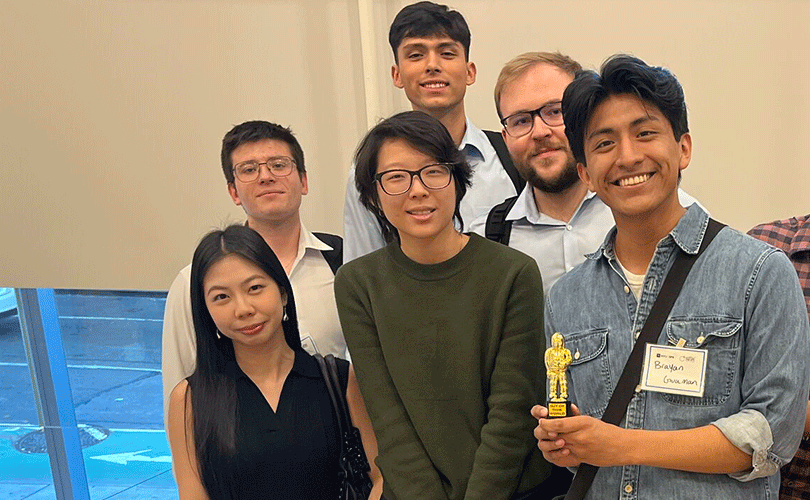
A team of Baruch College students won the Galactic Impact Award at the 2025 NASA International Space Apps Challenge in New York City, a global hackathon competition where teams have 48 hours to build a project using NASA data. Their project, CosmoSim, is a platform that shows what might happen if an asteroid hits the Earth. The idea came from a recent comet, known as ATLAS, that passed the Earth.
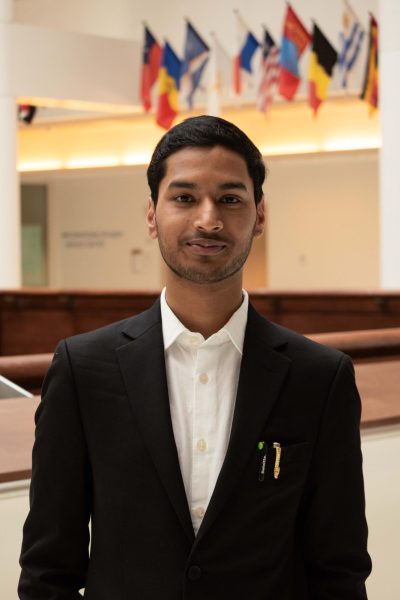
“It made them wonder what the real impact of a strike would look like. We just thought: what if we take the closest asteroids around Earth and make a simulation? If one of those asteroids came and hit us, what would happen?” team leader Nicole Liu said in an interview with The Ticker.
CosmoSim lets users click on any location on a map and see the possible impacts, which includes tsunamis, earthquakes, shockwaves and damage ranges. The team came from different majors.
“This is my first time becoming a team leader, and I think I’ve done basically everything wrong,” Liu said.
She worked on the pitch and overall plan, while the other members, who were more proficient with technical knowledge material, handled the data, testing and website creation.
“They did more of the technical aspect,” Liu told The Ticker. “Then they’d show me what was going on, and we’d move forward.”
The team pulled the information from APIs, as NASA requires teams to use open data. They also used artificial intelligence tools, like Google’s Gemini Studio, to help write and test code. Liu mentioned the main challenge was giving the AI clear instructions.
“It was more about how to tell the AI what to do,” she explained.
The team tried to build a 3D version of the simulation, but the tool they used kept crashing, so they switched to a simpler version that still worked well. CosmoSim is easy to use. Instead of long scientific explanations, it shows the results directly on the screen.
Users can see the level of damage, how far waves might reach and how strong the impact could be. The team hopes this helps people learn more about asteroid risks and why planning for them is important. Liu said she almost did not join the hackathon. Professor Vinayak Javaly, along with one of her friends, encouraged her to try.
“The courage they gave me was so much,” she told The Ticker. “I don’t think they realize.” She also mentioned that people do not need to be an expert coder to join events like these.
Many other good projects were based on design, storytelling or simply data ideas. Her advice for other Baruch students is clear: Try even if you feel unsure. “Just go for it,” she said. “You learn how to handle the stress, and everyone is more supportive than you expect.”
CosmoSim shows what students can create when they take a chance and work together. Using real NASA data, Team Mission CTRL built a simple yet powerful tool that helps people understand what an asteroid impact might look like and why it matters.