

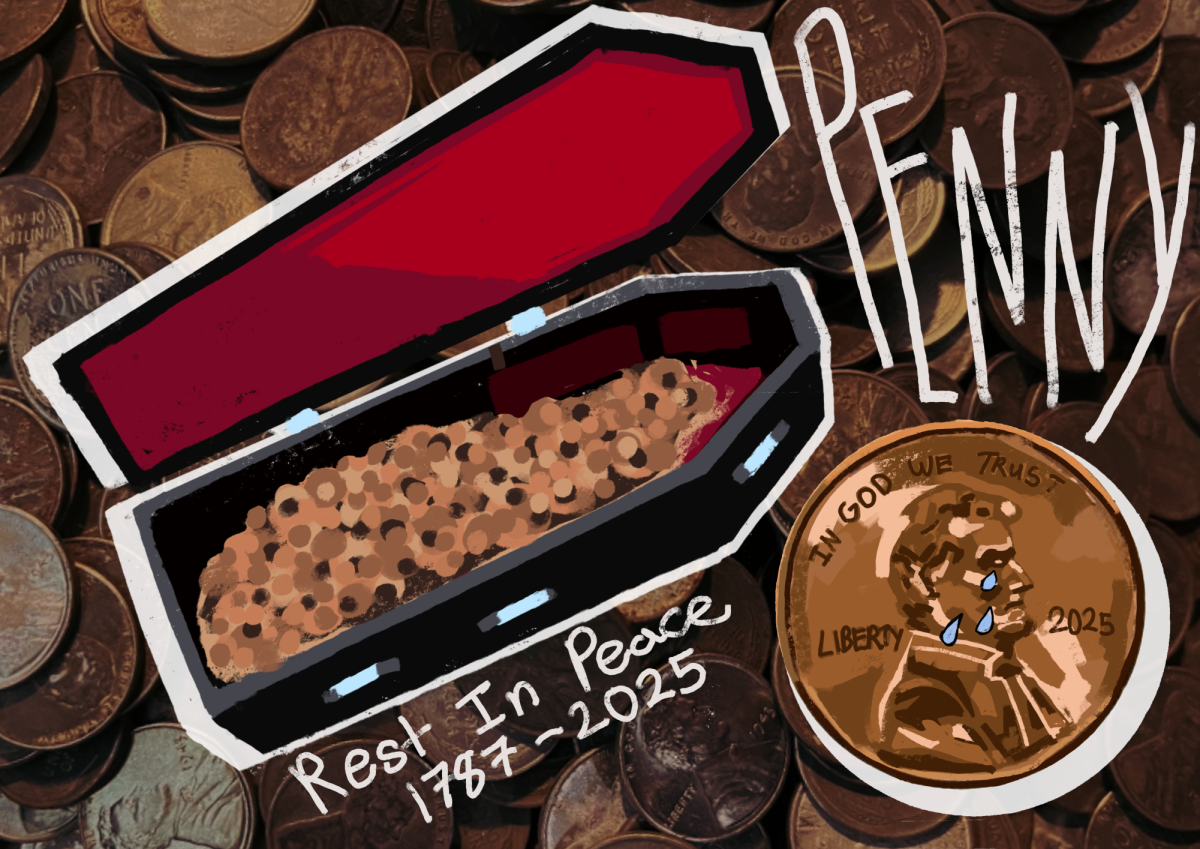
On Nov. 11, the penny stopped production and was the last day the U.S. Mint produced the coin.
President Donald Trump signed an order for the Treasury Department to end the production of the cent, as the administration focuses on cutting costs it deems wasteful.
According to the Associated Press, pennies cost four cents to produce.
“For far too long, the United States has minted pennies, which literally cost us more than 2 cents. This is wasteful!” Trump said on Truth Social. “I have instructed my Secretary of the Treasury to stop producing new pennies. Let’s rip the waste out of our great nation’s budget, even if it’s a penny at a time.”
The history of the penny dates back to 1787, when a private mint produced the Fugio Cent, which was made 100% out of copper.
With changes to the penny over the years, the penny finally became 2.5% copper, balanced with zinc.
Advocates for the penny argue that even though the unit cost has remained above face value for two decades, the penny plays a valuable role in the U.S. economy.
Mark Weller, an advocate at Americans for Common Cents, told in NPR in 2009 that working-class Americans would be left poorer as retailers will round their prices up.
“The alternative to the penny is rounding to the nickel, and that’s something that will negatively impact working families every time they buy a gallon of gas or a gallon of milk,” Weller said.
The axing of the penny could impacts workers at the four mints since the process is not completely machine-driven and employs over a thousand people.
The sole producer of penny blanks — Artazn Zinc, located in Greene County, Tennessee — is feeling the effects of job losses.
The Artazn Zinc company provides jobs throughout the East Tenn. region, not just Greene County, meaning hundreds of jobs can be lost.
But pennies are still considered legal tender and can still be used. The penny can still be exchanged for cash and other coin options for a fee in banks and Coinstar locations.