

A panel of Emergency Medical Service representatives and union representatives came together on Nov. 13 to testify before the New York City Council to split EMS from the Fire Department of New York to form an independent agency.
Donald Faeth, a retired FDNY rescue paramedic and ex-union vice president of Local 2507 who now works as an EMT and paramedic instructor at Laguardia Community College, has worked within EMS since before the merger happened in March 1996.
He explained that pre-merger, “We always had a very good relationship with the communities. They knew that we were there to help them.”
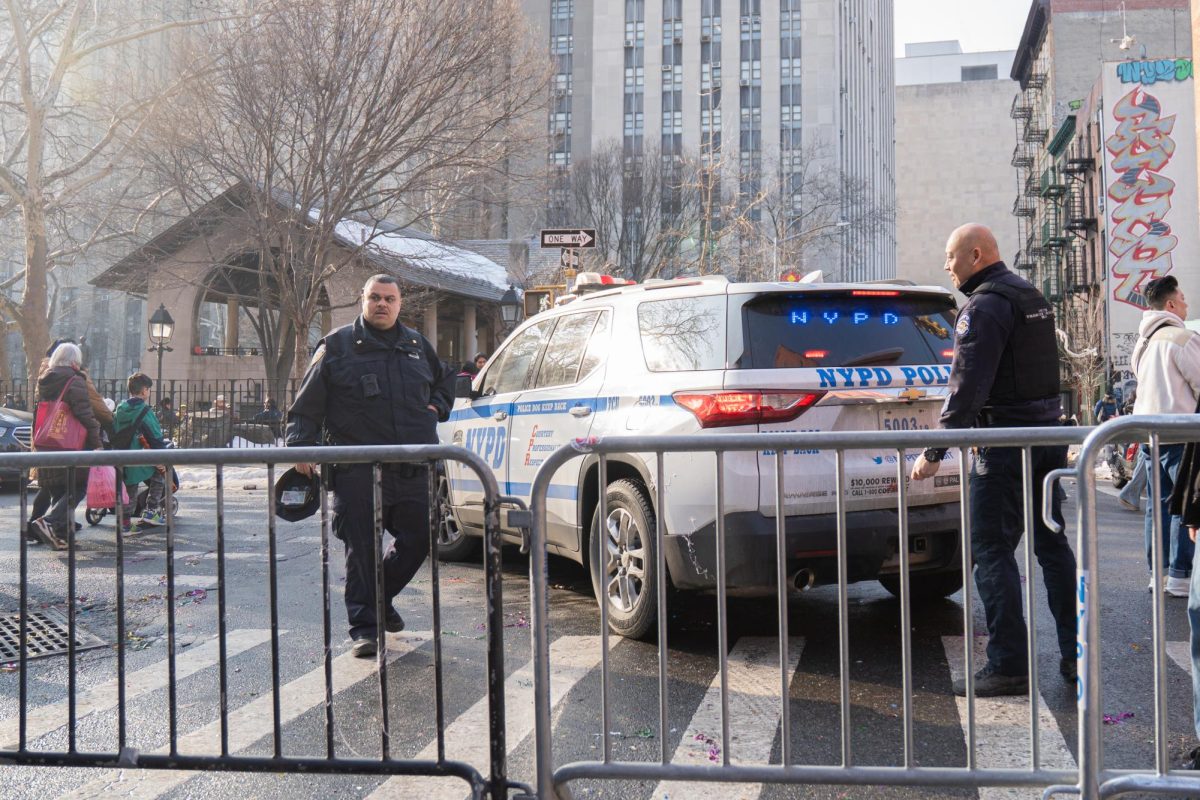
As a result of the merger, the EMS system in NYC had its identity stripped. Every ambulance had “FDNY” put on it to showcase their trademark and image.
Their once green and white uniforms were traded in for dark blue ones, causing personnel to be mistaken for police officers.
The lack of identity has made people see EMS as NYC’s most expensive taxi service.
The merger was originally arranged between former New York City Mayor Rudolph Giuliani and his FDNY commissioner at the time, Thomas Von Essen, due to how many firehouses closed at the time as well as a loss of funding and personnel.
In order to incentivize people to join the fire side of the department, they referred to becoming a firefighter as a “promotion.” While that may be true salary-wise, those who have both certifications have claimed that being a firefighter is much easier than what it takes to work within EMS.
EMS, the youngest of the first responder branches, wasn’t originally created into a sanitation uniformed service like fire and police were. They were made civilian employees under DC 37 until the 2000s. Since then, they acquired the same percentage as fire and police, but the base pay had never been adjusted, meaning the pay gap continues to grow every year, currently exceeding 50%.
Before the merger, the NYC Health and Hospitals Corporation oversaw the EMS system in New York. Its greater focus at the time was towards their in-hospital personnel, but they still ensured that the EMS system had all the appropriate resources. This set up meant that even if not everyone wanted to stay within EMS, they were still attracting medical professionals, no matter what regard they fell under, they all wanted to do medicine.
Juan Torres, a recent graduate from LAGCC’s paramedic program, is one of those uniformed workers that would have benefited from such a perk. Torres said that early on in his EMS career, he was allowed to observe open heart surgery being done on a patient that he and his partner brought in. Torres saw firsthand the dynamic of how everyone worked cohesively and seamlessly. “Everybody’s on their A game and it’s like they’re working without having to even communicate. I found that astonishing,” he said.
The experience solidified Torres’ desire to further himself in the medical field, but as the lowest paying job out of all the first responders, medical school isn’t exactly an easy feat.
Anthony Almojera, FDNY EMS lieutenant and union vice president of Local 3621, argues that the best thing to do for EMS is to reestablish it as an independent agency and stand-alone third service to be once again recognized as “healthcare professionals who provide critical care in the most dangerous, high-pressure situations.”
Almojera has been advocating for the split, supporting a revert to the pre-merger model. He testified, “The real reason why they don’t want to separate EMS from the FDNY is because they rely on EMS to cover 80% of the call volume in the department while only providing 10% (of the budget).”
Council member Justin Brannan said he had briefed Mayor Zohran Mamdani towards the split. Mamdani responded, “I also want to be surrounding myself with those who have been doing this work before coming to a conclusion that would affect the lives of many.” He noted he had not yet made up his mind about it.
The representatives argued that a pay parity alone is no longer a real solution to the problem, FDNY has shown them over the years that EMS will always be seen as a second class first responder as long as they remain merged. They urged the council members to “fix a broken system that everyone knows isn’t working as it should.”