
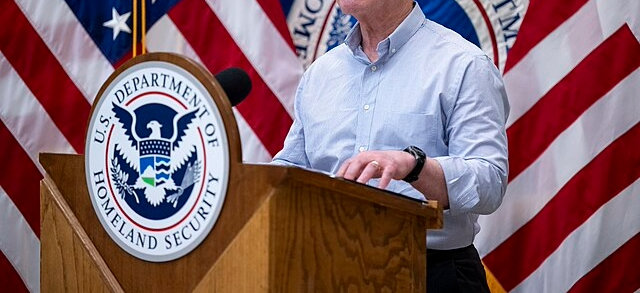
On Oct. 16, the Department of Homeland Security announced that a $1,000 fee will be imposed on immigrants paroled into the U.S.
These paroles grant immigrants temporary protection from deportation and allow them to stay in the country for a limited period of time.
This new fee comes from the HR-1 Reconciliation Bill, known as the “One Big Beautiful Bill Act,” which introduced a series of immigration related measures.
Under the law, the fee applies to all non-U.S. nationals, unless they fall under one of ten exemptions.
Some of these exemptions include people facing a life-threatening medical emergency, donating an organ for a transplant or attending the funeral of a family member that they would miss by entering the U.S. through the standard visa process.
According to DHS officials, the agency implemented the new fee to strengthen oversight of the parole system and prevent any misuse.
“This immigration parole fee notice is another tool to stop the degradation of our immigration system and restore law and order to our country,” Tricia McLaughlin, DHS’s Assistant Secretary, stated in a press release.
The person who is granted parole is responsible for paying the fee, which will be collected by the U.S. Citizenship and Immigration Services, U.S. Customs and Border Protection or U.S. Immigration and Customs Enforcement every time a period of parole is granted.
The payment must be made once parole is granted, not when the request is initially filed, and a notice will be sent to them by the USCIS with payment instructions and a deadline.
If the fee is not paid by the deadline stated in the payment notice, the parole request will be denied and the person must restart the process from the beginning.
The DHS has outlined that parole will not be finalized unless the fee has been completely paid.
The fee will also be adjusted every fiscal year to account for inflation based on the Consumer Price Index for All Urban Consumers.
This ensures that they are able to keep up with any related administrative or operational costs over time.
Many people have expressed concern that the new fee could place additional financial burdens on those seeking humanitarian paroles to flee crisis situations.
“For these individuals, the recurring $1,000 per-person fee represents a new cost consideration, particularly for families or sponsors who manage parole renewals every one to two years,” the National Law Review mentioned.
However, the DHS continues to assert that the fee is intended to ensure the sustainability and proper administration of the parole system, while still allowing for exemptions in urgent cases.