

Misty Copeland danced with the American Ballet Theater for the very last time on Oct. 22 after 25 years with the company.
Copeland began her dance training at 13 years old at a Boys & Girls Club gym in Los Angeles, a relatively late age to start in the ballet world when it comes to making it a career. Three years later, she was invited to ABT’s summer intensive program on a full scholarship.
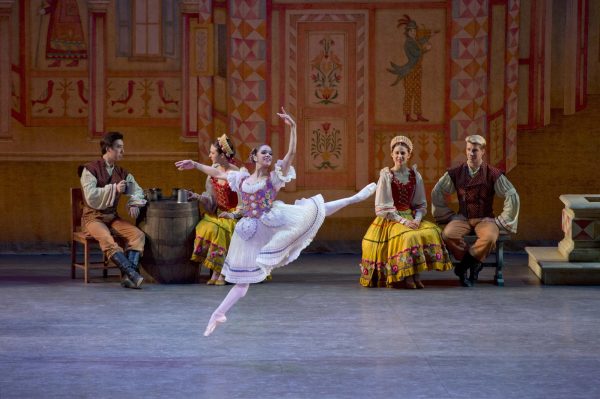
That invite marked the start of Copeland becoming the most well-known ballerina of this era.
Entering the dance world, especially in classical ballet, is often viewed as a traumatic experience. Dancers are subject to harmful body stereotyping, humiliation and unrealistic expectations, leaving many with a negative self-image and eating disorders.
Copeland was also entering a ballet world filled with racial discrimination toward what created the “perfect” ballerina mold, which had Eurocentric standards for not only the shape of the body but also the muscle tones and skin color.
Copeland shared in an interview that she quickly learned she was at a “disadvantage” when her first ballet school rejected her. The letter said, “You lack the right feet, achilles tendons, turnout, torso length and bust. You have the wrong body for ballet.”
Once Copeland was accepted into ABT, she began making her mark. After just one year, she was accepted into their corps de ballet in 2001, where she danced with a group as the “backbone of the company.” In 2007 she became the company’s second ever African American soloist; it had been two decades since they named the first.
Copeland made history in 2015 when she officially became ABT’s first ever African American principal dancer; the year before, she became the first person of color to lead in their production of “Swan Lake” as Odette/Odile.
Throughout her time at ABT, she became world renowned for her skill and advocacy. Under former President Barack Obama, she became a member of his advisory Council of Fitness, Sports and Nutrition. Copeland said she quickly embraced the role of a mentor because “I feel like people are looking at me, and it’s my responsibility to do whatever I can to provide opportunities.”
In 2021 she launched “The Misty Copeland Foundation,” which aims to advance diversity within ballet and art activism. As part of her mission, the foundation provides “opportunities for children in under-resourced communities to engage their bodies, hearts, and minds in learning through dance, especially ballet.”
During ABT’s annual fall gala, Copeland took the stage with them for the last time at the David H. Koch Theater at Lincoln Center after a five-year hiatus due to an injury.
During her farewell performance, she performed excerpts from “Romeo and Juliet,” “Wrecka Stow” and “Sinatra Suite,” along with performances by other company dancers. Between performances clips were shown of different stages in Copeland’s career and life.
The performance ended with one final dance to “My Way” by Frank Sinatra with Principal Dancer Herman Cornejo. As the song came to an end, she was accompanied by colleagues, ballet coaches, her three-year-old son and her very first ballet teacher. Copeland was given so many flower bouquets during her many curtain calls that there was a large pile of them downstage behind her as the curtain fell.
Copeland reflected on the performance and her overall time at ABT later in an Instagram post. She noted that perhaps the most special thing about this performance was that for the first time, her son was able to be in the audience and see his mom dance on stage.
She expressed that it would be a night she carries with her forever, “I’m deeply honored to continue my connection to ABT as a member of the Board of Trustees—supporting the next generation of dancers and storytellers who will lead this art form forward.” Copeland expressed how the farewell performance was like her saying “thank you” to the company.
“I feel like it’s the perfect timing for me to be stepping into a new role, and hopefully still shaping and shifting the ballet world and culture,” Copeland said in an interview.