

The spread of the highly pathogenic Avian Influenza, dubbed “Bird Flu,” has already been cited as the cause for increasing egg and dairy prices throughout the U.S. The disease has now claimed the lives of three ducks at the Queens Zoo and is suspected in the deaths of 12 birds, both wild and in collection, at the Bronx Zoo.
In response to the bird deaths, both zoos have begun isolating exposed and at-risk birds, particularly waterfowl.
In a statement from the Wildlife Conservation Society, which operates both zoos, the organization clarifies how it is limiting contact between wild birds and those within exhibits. “We implemented steps at our zoos and aquarium to limit exposure of our animals to wild birds, mainly species of waterfowl, known to be significant carriers of avian influenza.”
HPAI has been spreading throughout the U.S. with increased since late last year, and the Centers for Disease Control and Prevention has been keeping an eye on this strain, H5N1, since 1996.
This strain is highly pathogenic and can manifest asymptomatically in impacted birds, easily delaying recovery tactics. As a result, many farms have had to completely halt sales and, in many cases, kill off large portions of their flock to prevent the spread.
This is not only time-consuming but extremely costly and ultimately has been resulting in an egg and poultry scarcity that many American consumers have been feeling over the past year.
Additionally, despite the general name, this virus does not only impact birds.
Last year, cows had begun suffering from the same strain, affecting milk quality earnings. The virus has earlier this year made its first appearance infecting birds, recently made the jump to cows, impacting several farms in Texas.
The virus has also infected humans in two states, resulting in one death. As of Feb. 9, Ohio announced its first human case via the H5N1 strain.
Other household pets may be similarly at risk as well, with the American Veterinary Medical Association warning pet owners in January to avoid feeding animals any raw poultry and unpasteurized milk following several cases of the flu among cats and dogs reportedly. Additionally, outdoor cats may be at risk if they come into contact with infected wild birds.
The virus also infected chicken owners on Feb. 9. Gov. Kathy Hochul issued a notice and cleaning warnings after a number of infected poultry businesses in NYC, as well as upstate and Nassau.
Though humans are not at risk, something reiterated by the WCS as it keeps its zoos open to the public, though there is growing concern surrounding a rare strain of H5N9, a rearrangement of H5N1.
This has caught attention following a duck farm in California, marking its first U.S. case of the virus.
In response, the World Organization for Animal Health quarantined the farm, resulting in the culling of 119,000 birds.
While there isn’t enough information to determine if this rare strain will present a larger threat, the fact that it is an alteration of the very widespread H5N1 raises concern for future mutations with the potential to cause pandemic-level spread.
The AMA referenced a lab study where researchers modified the virus and found that it would take only one amino acid specific to mammal infection for it to successfully infect human cells.
However, Bird Flu is far from a new morbidity globally, with some countries dealing with outbreaks near annually. Those more familiar with its spread seem to be less concerned about their own wellbeing.
“I’m coming from a country where every year we have bird flu, it’s not a worry to me,” Chawsu, a Queens Zoo visitor, told The New York Times.
Currently, the CDC suggests those dealing with wild birds, especially waterfowl and poultry, to wear personal protective equipment.
Categories:
Bird Flu concerns increase beyond grocery aisles, spreading to zoos
February 18, 2025
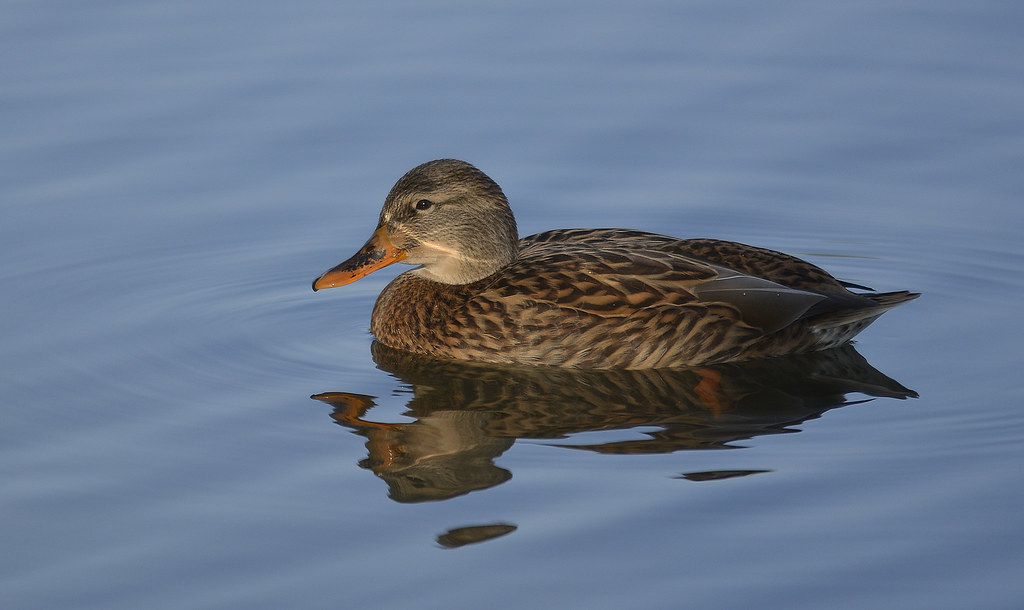
Antal Werner | Flickr
More to Discover



About the Contributor

Julia Aiello, Science & Technology Editor
Julia Aiello is the Science & Technology Editor for The Ticker.